Dirt is Good: Why Nature is One of Our First Immune Teachers
Exploring the science behind why safe exposure to nature may be one of the oldest forms of immune education
When Dr. Martin Blaser published Missing Microbes, he sounded a global alarm about the internal extinction crisis facing industrialized humans. But if Blaser gave us the diagnosis, two of his closest colleagues and fellow co-founders of The Microbiota Vault gave us the everyday prescription.
In their landmark book, Dirt Is Good: The Advantage of Germs for Your Child's Developing Immune System, published in 2017, Dr. Rob Knight and Dr. Jack Gilbert stepped out of their high-tech genomic sequencing labs to hand parents a powerful, liberating truth: the world is not a biohazard to be managed, but a treasured ecosystem to be embraced.
For parents striving to nurture healthy children, this book represents a monumental shift. It reframes early-life microbial exposure as a protective ritual: a conscious recognition of the continuity between the earth beneath our feet and the fitness of our bodies.
The Scientists Behind the Soil
Rob Knight and Jack Gilbert are two of the most heavily cited environmental microbiologists and data scientists in human history. As co-founders of the Earth Microbiome Project and the American Gut Project, they spent decades mapping the microscopic biodiversity of oceans, soils, and homes.
But when they became fathers, they found themselves bombarded with the same hyper-sanitized, anxiety-driven advice that plagues modern parenting. They realized that the 19th-century "war on germs" had turned the household into a chemical battleground. Dirt Is Good was born out of a desire to replace fear with evolutionary science, showing that a child’s immune system is a sophisticated learning machine that requires environmental interaction to calibrate properly.
The Wisdom of the Mess: Practical Q&As from the Lab
Written in a highly accessible and pragmatic direct question-and-answer format, Dirt Is Good tackles the everyday anxieties of modern parenting. Covering over 100 questions across pregnancy, birth, breast-feeding, antibiotics, probiotics, the child’s diet, gut, depression, vaccination, the environment, specific conditions and the pros and cons of microbiome testing, here is a sample of how Knight and Gilbert’s evidence-based guidelines reframe household, dirt and hygiene rituals.
Q: Is eating dirt really good for my kids?
A: Let your kid play in (and even eat) the dirt. Soil is a microbial heaven, with more than a billion bacterial cells per gram, and many fungi and viruses as well. Unless there’s a lot of animal poop around the soil (which would be a bit gross), you can relax in knowing the soil contains very few organisms that could make your child sick. It is a great source and a great opportunity to expose children to a complex microbial community that will help train their immune system. Even thumb-sucking appears as an excellent microbiome-delivery system: there is a correlation between oral habits (thumb sucking and nail-biting) and reduced rates of common allergies.
Q: My child dropped their pacifier on the floor. Should I sanitize it?
A: No. In fact, the absolute best thing you can do is put it in your own mouth, suck it clean, and hand it back to them. Knight and Gilbert highlight studies showing that parents who "clean" pacifiers with their own saliva significantly reduce their children’s risk of developing asthma, eczema, and allergies later in life. This way, you are actively transferring a rich tapestry of protective oral microbes to stimulate their immune tolerance.
Q: How clean should my kitchen and floors really be?
The Science: Put down the chemical sanitizers. The ubiquitous use of antibacterial wipes and household disinfectants creates an evolutionary imbalance, wiping out benign "Old Friend" environmental strains while selecting for resilient, hyper-resistant pathogens. Washing surfaces with basic soap and water is more than enough. A home should be clean, but never sterile.
« A house should be clean enough to be healthy but dirty enough to be happy » -Jack’s mother.
"Your kitchen floor is not an operating room, and it shouldn't be treated like one. The micro-exposures your child gets from living in a normal, un-sanitized home are the very signals their body needs to build a shield of resilience." –Rob Knight and Jack Gilbert.
Q: Is it safe to let my child play in natural mud, sandboxes, and soil?
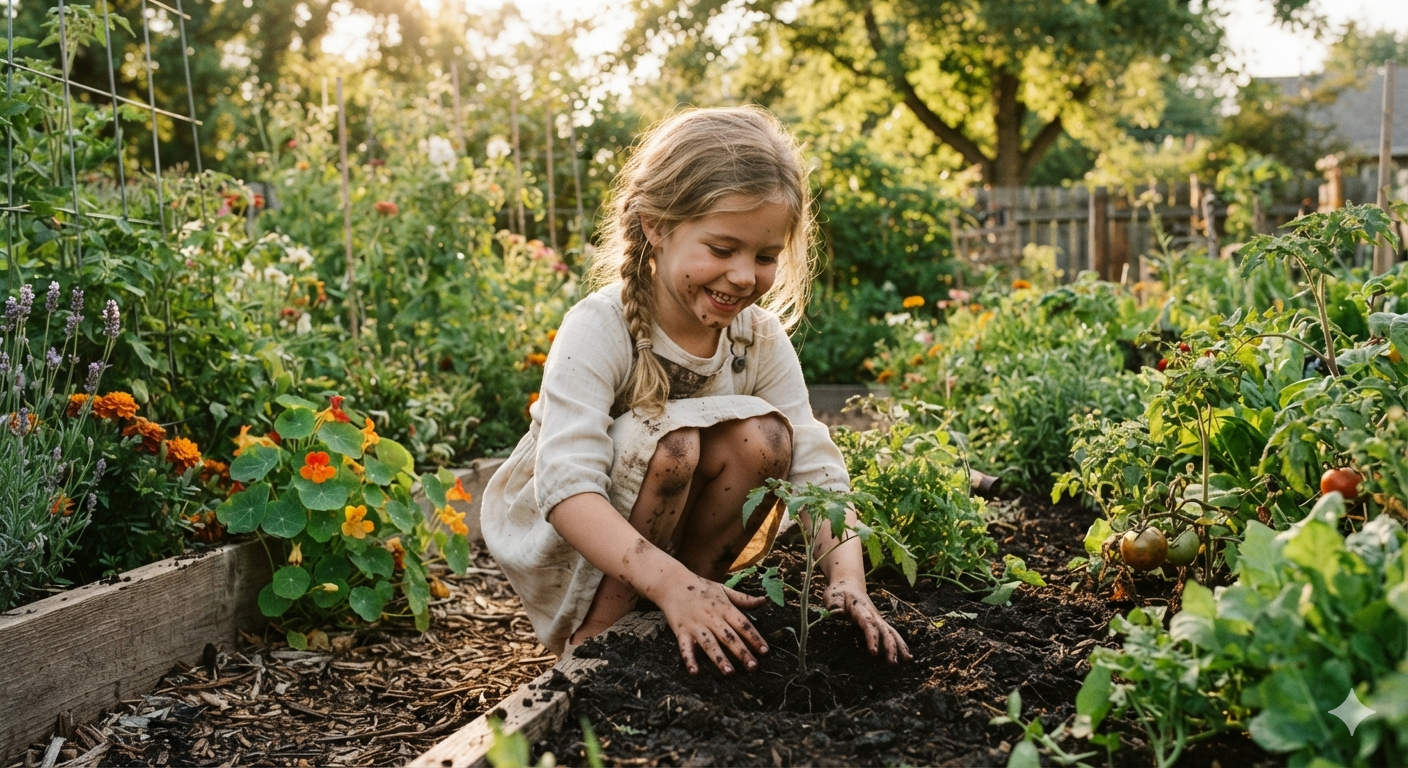
The Science: It is not just safe; it is an essential developmental milestone. When children dig in the earth, make mud pies, and interact with outdoor ecosystems, they are interacting with the planet's ultimate "microbial seed bank."
"Sterility is an unnatural state for humans. We evolved to be covered in, and fueled by, avast sea of microscopic life. When we cut those ties, our health fractures." - Rob Knight and Jack Gilbert.
Q: Should I let my child drink from a public water fountain? Is tap or bottled water better?
A : To the best of our knowledge there are no risks in drinking from a public water fountain in the developed world. But there are risks associated with both city water and bottled water: bisphenol A in bottled water, chlorine in tap water, but you’d have to drink a great quantity of city water to negatively influence the microbiome. And in the end, the dangers of dehydration are significantly higher than any of these.
Q: How frequently should my toddler wash hands?
A : Washing with soap and water is a good idea if your toddler touched something likely to have pathogens – say, after visiting a hospital or touching a countertop where raw meat was prepared, and before eating. You don’t need to use antibacterial soaps or hand sanitizers unless you work in the healthcare setting.
Q : Should I take my kids to a farm?
A : Yes, as early in their life as possible, and as frequently as possible. And while there, let them stroke as many animals as they want and even rub their faces up against the ones that will let them. Let them enjoy all the dirt, mud, grit and dust they can find. The only word of caution is that you might want to stop them from eating any poop they find on the floor. Sometimes pigs, reptiles, and amphibians carry parasites or bacteria that can make kids sick.
Children who grew up on farms have a lower likelihood of developing asthma and allergies.
"An under-stimulated immune system is like an under-stimulated brain: it looks around for something to do, and ends up attacking things that are completely harmless, like pollen or peanuts." - Rob Knight and Jack Gilbert.
Q : How do gut microbes shape my child’s immune system?
A : Gut microbes help regulate your child’s inflammatory response by releasing two types of immune cells from the gut wall that act in opposing manner. One, called TH17, promotes inflammation. The other, Treg, quells it. The good news is your child’s gut contains bacteria especially designed to feed Treg cells. They ferment the fiber or complex carbohydrates in your diet and release short-chain fatty acids that signal Tregs to release chemicals that stop TH17 cells from causing inflammation.
We have delegated to bacteria some of these mechanisms that keep the response to allergens and antigens balanced.
Any failure to regulate the inflammatory response in your child’s body can have profound consequences for chronic diseases, including food allergies, asthma, and auto-immune conditions ranging from inflammatory bowel disease to diabetes to multiple sclerosis. All of these have now been linked to the gut microbiome.
In short :
"We need to move from an era of eradication to an era of stewardship. Our job as parents isn't to protect our children from the microbial world, but to introduce them to it safely and robustly." - Rob Knight and Jack Gilbert.
The Modern Frontier: Soil-Based Reconnection
The actionable advice in Dirt Is Good is being reconfirmed by a whole new generation of planetary health research. As highlighted by recent trials from Finnish scientists like Dr. Aki Sinkkonen and Dr. Marja Roslund, we are discovering that we don't need to live in the deep wilderness to reap the rewards of the earth.
Simple, intentional daily practices, like potting plants, installing forest-soil seeded entryway rugs to naturally diversify indoor dust, or encouraging children to play in biodiverse, soil-enriched playgrounds, help restore the human system’s balance. These micro-exposures significantly upregulate regulatory T-cells and anti-inflammatory cytokines (like TGF-beta and IL-10), dampening systemic inflammation and reinforcing the highly sensitive gut-brain-immune axis.
Reference : Knight, R.,& Gilbert, J. (2017). Dirt Is Good: The Advantage of Germs for YourChild's Developing Immune System. St. Martin's Press.